Dalat Persimmon Season: When the Hills Turn Orange


1. A Different Kind of Autumn in Dalat
Autumn does not arrive dramatically in Dalat.
There are no vast forests suddenly changing colour and no clear moment when one season simply ends and another begins.
Instead, the transition appears in smaller details.
The mornings feel cooler. Mist stays a little longer between the hills. Rain becomes finer and softer. And somewhere between gardens, old villas and quiet country roads, the first persimmons begin to turn orange.
Soon, branches that spent much of the year blending quietly into the landscape become impossible to miss.
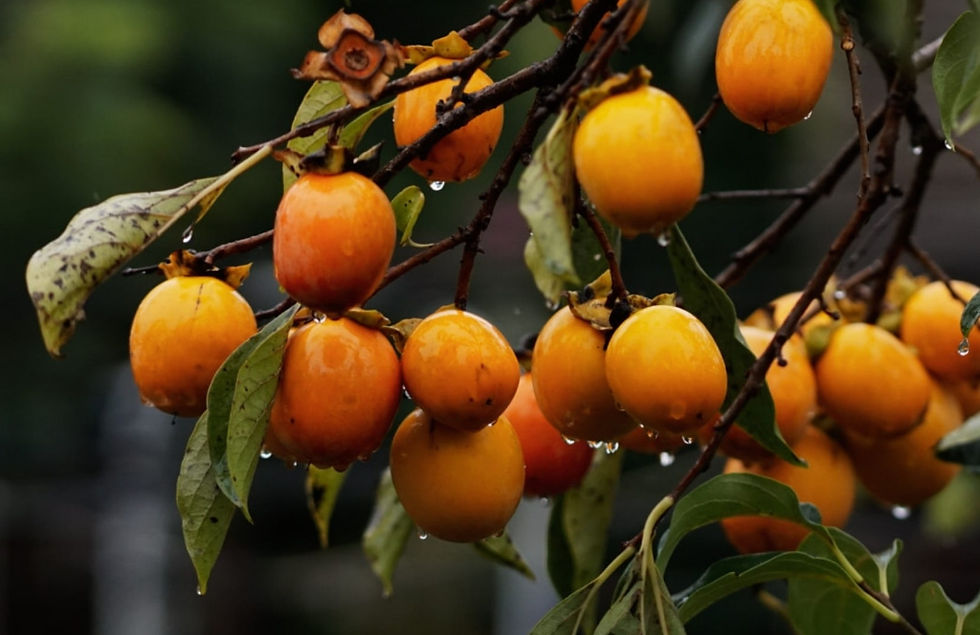
Clusters of fruit hang between deep green leaves. Some are pale yellow, others brilliant orange, and a few have already deepened into the warm colour of late afternoon light.
This is Dalat persimmon season - one of the city’s most understated and beautiful seasonal moments.
It does not demand attention.
You simply notice it.
And then, suddenly, persimmons seem to be everywhere.

2. When Is Persimmon Season in Dalat?
Persimmons in Dalat generally begin appearing from late summer and become increasingly visible through the autumn months, although the exact timing varies with weather conditions and individual gardens.
For travellers hoping to see trees heavy with colourful fruit, September through November is usually the most rewarding period.
Earlier in the season, the landscape is greener and the fruit may still carry softer yellow-orange tones.
As the season progresses, the colours deepen.
Toward the later weeks, some trees begin losing their leaves, leaving bright fruit hanging almost alone on bare branches - a completely different but equally beautiful scene.
That changing appearance is part of the charm.
There is no single “perfect” week.
A misty September garden, a rain-soaked October branch and a nearly bare November persimmon tree each tell a slightly different story of Dalat.
3. Why Persimmons Feel So Much Like Dalat
Persimmons fit naturally into Dalat's landscape.
They are not flashy.
They grow beside old homes, along garden paths and on hillsides where people have quietly cultivated them for generations.
And perhaps that is precisely why they feel so characteristic of the city.
The fruit brings colour without changing the peaceful nature of the surroundings.
Against the muted green of pine trees, weathered wooden fences and grey autumn skies, the orange seems warmer.
After a drizzle, tiny drops of water cling to the fruit and leaves.
When sunlight returns, the same branches suddenly glow.
It is the kind of beauty Dalat does particularly well:
seasonal, imperfect and easy to miss if you are moving too quickly.
4. More Than a Photo Opportunity
It is easy to understand why persimmon season has become popular with photographers.
The colours are irresistible.
But the experience becomes much richer when it is not reduced to simply finding a tree, taking a photograph and leaving.
Slow down.
Walk through a garden if it is open to visitors.
Notice how the fruit changes colour from tree to tree.
Watch how older branches bend under their weight.
Look at the moss beneath the trees, the small wooden houses nearby and the mist settling behind them.
And, when possible, taste the season too.
Fresh persimmons can range from crisp and refreshing to deeply sweet depending on the variety and ripeness.
You may also come across one of Dalat's best-known seasonal treats: wind-dried persimmons, where ripe fruit is carefully peeled and dried over time until it develops a soft, concentrated sweetness.
The result is something entirely different from eating the fruit straight from the tree - yet both belong to the same seasonal story.
5. A Few Tips for Enjoying Dalat Persimmon Season
If persimmons are part of your Dalat itinerary, a little planning helps.
Go in the morning
The air is cooler, the light is softer and gardens tend to feel particularly peaceful before the day becomes busy.
Do not worry about cloudy weather
Persimmons can look especially beautiful against mist, drizzle and muted skies. Dalat does not always need sunshine to be photogenic.
Ask before entering or picking fruit
Many persimmon trees grow on private farms or residential land. Enjoy the view respectfully and only harvest fruit where the owner specifically permits it.
Wear practical shoes
Garden paths can become muddy after rain.
Leave some room in the itinerary
This is one of those seasonal experiences that becomes less enjoyable when squeezed between five other check-in points.
The best photographs often appear after you stop searching for them.

6. Persimmon Season, the Slow Way
Perhaps the nicest thing about persimmon season is that there is not really anything you are required to do.
There is no attraction to complete.
No itinerary to conquer.
Sometimes it is simply a branch of orange fruit outside a window.
A tree caught in the drizzle.
A basket at a local market.
Or a quiet garden discovered while walking without much of a plan.
At Dalat Train Village, we have always liked this side of Dalat - the one revealed through ordinary seasonal changes rather than crowded landmarks.
Because sometimes the memory that stays with you is not the place you travelled across town to see.
It is the small thing you happened to notice when you finally stopped rushing.
And during persimmon season, Dalat gives you plenty of reasons to stop.
Planning Your Stay
If you are visiting Dalat during persimmon season, leave a little space in your schedule for slow mornings, garden walks and whatever the weather happens to bring.
Explore Dalat Train Village: www.dalattrainvillage.com
Google Maps: https://maps.app.goo.gl/X5zpVrputrtZDLf27


Comments